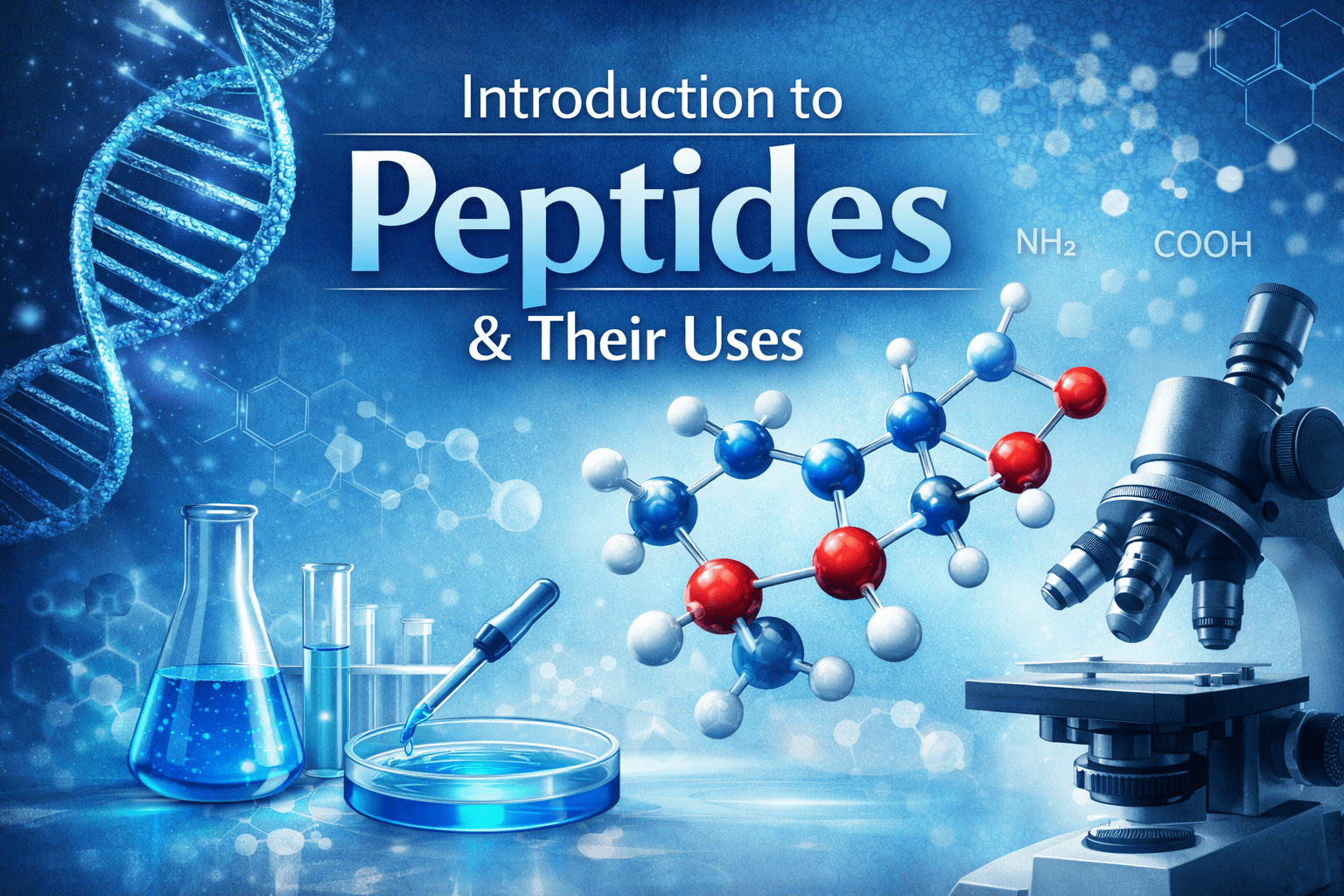
Peptides are short chains of amino acids that play a fundamental role in biological systems. In scientific research, peptides are studied for their structural properties, biochemical interactions, and potential applications across laboratory disciplines. As interest in precision research compounds continues to grow, understanding the basics of peptide science is essential for researchers and laboratories alike.
At D&L Peptides, we supply Premium Research Peptides intended strictly for laboratory and scientific use. This article provides a foundational overview of what peptides are, how they are structured, and why they are widely studied in controlled research environments.
What Are Peptides?
Peptides are molecular compounds composed of two or more amino acids linked together by peptide bonds. Amino acids serve as the building blocks of proteins, and peptides can be understood as shorter sequences derived from these larger protein structures.
The primary difference between peptides and proteins lies in length:
- Peptides typically contain fewer than 50 amino acids
- Proteins generally consist of longer, more complex amino acid chains
Because peptides are smaller and more structurally defined, they are often used in laboratory settings to study molecular interactions, signaling pathways, and biochemical mechanisms.
How Peptides Are Structured
Peptides are formed through a process known as peptide bond formation, where amino acids link via a condensation reaction. The resulting sequence determines the peptide’s structure and biological characteristics.
Researchers typically examine:
- Primary structure (amino acid sequence)
- Secondary structure (local folding patterns)
- Chemical stability under various environmental conditions
Peptide stability may be influenced by temperature, moisture, and light exposure. For broader scientific literature on peptide structure and function, researchers may consult peer-reviewed databases such as PubMed
Synthetic Peptides in Laboratory Research
Modern research frequently relies on synthetically produced peptides. Laboratory-grade peptide synthesis allows for:
- Precise amino acid sequencing
- Controlled purity levels
- Batch-to-batch reproducibility
- Analytical verification
High-purity research peptides are typically manufactured using solid-phase peptide synthesis (SPPS), followed by purification and analytical validation processes.
At D&L Peptides, we emphasize strict production standards and independent third-party testing to verify purity and consistency across all supplied research compounds.
Common Areas of Peptide Research
Peptides are studied across multiple scientific disciplines, including:
- Biochemistry
- Molecular biology
- Cell signaling research
- Structural analysis
- Analytical chemistry
Researchers may investigate how specific peptide sequences interact within controlled experimental systems. Ongoing scientific studies involving peptide compounds can be explored through publicly accessible research databases such as ClinicalTrials.gov
Lyophilised Peptides and Stability Considerations
Many research peptides are supplied in lyophilised (freeze-dried) form. Lyophilisation improves material stability during storage and transport by removing moisture under controlled conditions.
Because environmental factors may influence structural integrity, research facilities should manage peptide compounds within controlled laboratory environments. General storage awareness information can be found in our
Peptide Storage Guidelines page.
The Importance of Quality and Verification
In research settings, consistency and analytical accuracy are essential. Even minor variations in purity or composition may influence experimental outcomes.
For this reason, laboratories often prioritise:
- Verified analytical purity
- Batch consistency
- Transparent quality assurance
- Controlled manufacturing standards
Independent third-party testing plays an important role in validating peptide identity and purity before materials are supplied for research use.
Regulatory and Research-Only Designation
It is important to understand that research peptides supplied by D&L Peptides are designated strictly for laboratory research use. They are not authorised, approved, or intended for human or veterinary use under any circumstances.
Researchers seeking official regulatory information within the United Kingdom may consult the Medicines and Healthcare Products Regulatory Agency (MHRA)
Conclusion
Peptides represent a foundational component of modern biochemical research. Their defined structure, reproducibility, and versatility make them valuable compounds for laboratory study across numerous scientific disciplines.
By understanding peptide structure, synthesis, stability considerations, and quality standards, researchers can better evaluate compounds for their specific laboratory needs.
D&L Peptides remains committed to supplying Premium Research Peptides manufactured to strict quality standards and intended exclusively for scientific and laboratory research use.