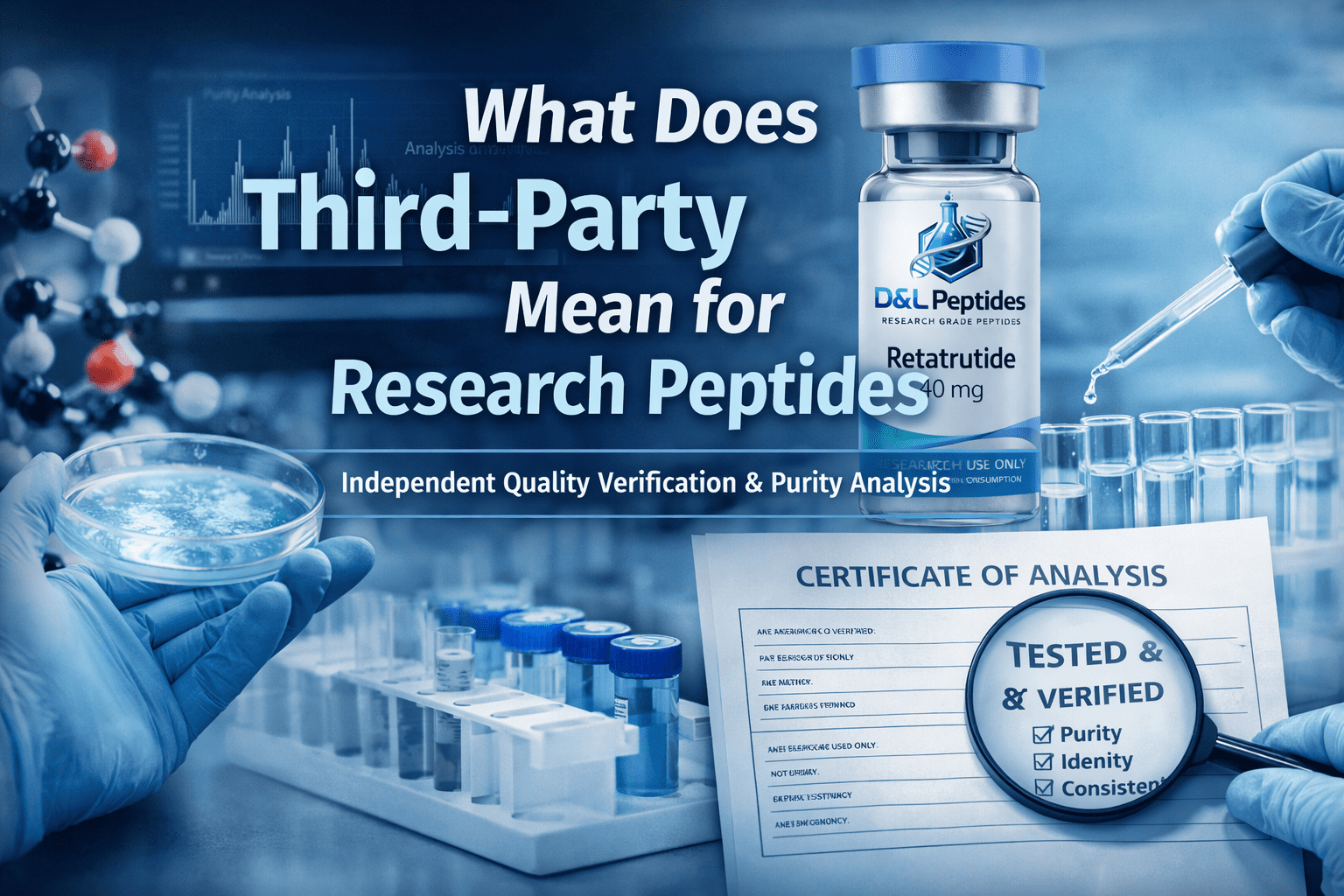
In laboratory research, precision and reproducibility are critical. Even minor variations in compound purity or structural identity may influence experimental outcomes. For this reason, many research facilities prioritise materials that are described as third-party tested. But what does that designation actually mean for research peptides?
This article explains the concept of third-party testing, why it matters in controlled laboratory environments, and how independent verification supports research integrity.
What Are Third-Party Tested Research Peptides?
A research peptide described as “third-party tested” has undergone analytical evaluation by an independent laboratory separate from the original manufacturer. This independent verification provides an additional layer of quality assurance beyond internal production controls.
Rather than relying solely on in-house testing, third-party analysis introduces objective validation of key parameters, which may include:
- Analytical purity
- Molecular weight confirmation
- Peptide identity verification
- Impurity profile assessment
Because independent laboratories operate separately from the manufacturer, this process enhances transparency and accountability within the supply chain.
For peer-reviewed discussions of peptide analysis methods, researchers may consult https://pubmed.ncbi.nlm.nih.gov/
Why Independent Verification Matters in Laboratory Research
Reproducibility remains one of the foundational principles of scientific research. If a compound varies from batch to batch, experimental outcomes may become inconsistent.
Third-party testing contributes to research stability by helping to:
- Confirm compound identity
- Verify stated purity levels
- Detect synthesis byproducts
- Support documented batch consistency
As a result, laboratories can evaluate materials based on independently verified analytical data rather than manufacturer-only documentation.
At D&L Peptides, we emphasise controlled production standards alongside independent analytical verification to support reliable laboratory research applications.
Common Analytical Methods Used in Peptide Testing
Independent laboratories may use established analytical techniques to assess research peptides. While testing protocols vary, common evaluation methods can include:
High-Performance Liquid Chromatography (HPLC)
HPLC is frequently used to assess analytical purity by separating components within a sample. This technique helps quantify the proportion of the intended peptide relative to impurities.
Mass Spectrometry (MS)
Mass spectrometry assists in confirming molecular weight and structural identity, helping verify that the synthesised peptide matches the intended sequence.
Additional Analytical Techniques
Depending on context, laboratories may also evaluate:
- Amino acid sequencing
- Structural confirmation
- Stability profiling
Scientific literature discussing peptide analysis methodologies can be explored via https://pubmed.ncbi.nlm.nih.gov/
Batch-to-Batch Consistency and Research Reliability
One of the most important advantages of third-party testing is improved confidence in batch consistency. Research peptides are often manufactured in multiple production runs. Without consistent analytical verification, variation may occur between lots.
Independent testing helps confirm that each batch maintains:
- Comparable purity levels
- Consistent analytical characteristics
- Verified molecular identity
This level of documentation supports laboratories conducting structured research programs that require repeatable materials over time.
Transparency and Documentation
Beyond analytical confirmation, third-party testing supports transparency. Independent verification reports may include detailed chromatograms, analytical summaries, and purity metrics.
Researchers reviewing Certificates of Analysis (COAs) may look for:
- Clear analytical method identification
- Stated purity percentage
- Batch or lot identification
- Testing laboratory reference
For broader regulatory awareness in the United Kingdom, laboratories may refer to the
https://www.gov.uk/government/organisations/medicines-and-healthcare-products-regulatory-agency
How Third-Party Testing Supports Responsible Research Supply
In research-adjacent industries, supplier credibility matters significantly. Independent testing contributes to responsible supply practices by introducing accountability and reducing reliance on internal-only documentation.
When combined with:
- Controlled synthesis procedures
- Purification standards
- Internal quality assurance
- Transparent documentation
Third-party testing forms part of a comprehensive quality framework.
At D&L Peptides, we integrate controlled manufacturing processes with independent analytical verification to support high-purity research compounds intended strictly for laboratory use.
Research Use Only Designation
It is important to clarify that research peptides supplied by D&L Peptides are designated exclusively for laboratory and scientific research use. They are not authorised, approved, or intended for human or veterinary use under any circumstances.
For general awareness of ongoing peptide research contexts, researchers may consult publicly accessible databases such as
https://clinicaltrials.gov/
- View our Premium Research Peptides
- Review our Peptide Storage Guidelines
- Learn more about our Quality & Testing standards